


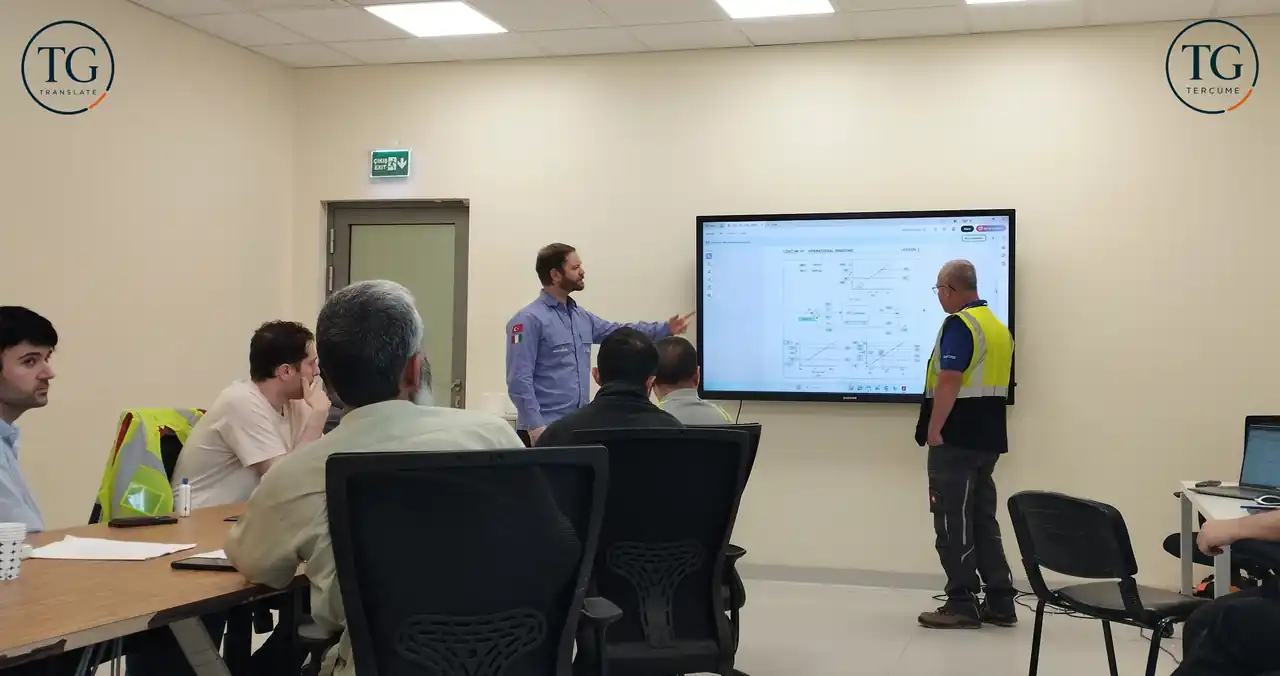
Russian interpreting for technical training and site visits helps participants follow expert explanations, ask questions and refer to technical documents. For machinery training, a factory visit or a maintenance meeting, subject preparation matters alongside language skills.
A classroom session may move to a machine or production area later in the day. Describe the product, process, training format and working environment when requesting an interpreter. This guide sets out practical preparation steps for assignments in Türkiye.
Where Can a Russian Technical Interpreter Help?
- Machinery and equipment training: Product introductions, interface explanations and instructor-led demonstrations.
- Production and factory visits: Process flow, equipment components and associated technical discussions.
- Maintenance or service meetings: Report references, observed symptoms, explanations and follow-up questions.
- Site and acceptance discussions: Test agendas, observations, open points and the authorised team’s assessment.
The interpreter enables communication and does not replace the instructor, operator or engineer. The host’s authorised personnel provide safe-working instructions. When an explanation is unclear, asking for clarification helps prevent participants from continuing on an assumption.
Do You Need Russian–Turkish or Russian–English Interpreting?
Do not infer working languages from participants’ nationalities. Confirm the instructor’s presentation language, the trainees’ question language and the language of the documents separately. A Russian-speaking specialist and a Turkish-speaking production team may need direct interpreting in both directions.
If the manuals are in English, say so. A Russian–Turkish interpreting assignment does not automatically include written translation of all English technical documents. Agree the direct language pair or any need for an intermediate language before the event.
Identify who will answer commercial or scheduling questions as well as technical questions. Adding a third language or another group late in the programme can change staffing and preparation requirements.
Prepare Technical Terminology and Cyrillic References
Keep Russian terms in their original spelling, with context and the preferred equivalent. Model names, equipment labels, drawing references and software menu text are particularly useful. A Latin-letter pronunciation guide should not replace the original product or document name.
Explain internal abbreviations and identify a technical contact who can confirm terms. Keep the reference visible when discussing units, decimal notation or values on a screen. The aim is to identify the component or process the speaker means, rather than have the interpreter invent an engineering definition.
If a supplier uses different terminology from the training team, flag the distinction in the preparation pack. A brief explanation and a labelled illustration can be more useful than a long list of isolated words.
Choose Consecutive or Simultaneous Interpreting by Activity
A small practical group may use consecutive interpreting with planned pauses. The instructor explains a manageable section, the interpreter conveys it and questions are taken one at a time. Allow time for speech, interpretation and the practical activity.
Extended classroom presentations or a larger audience may suit simultaneous interpreting with an appropriate audio arrangement and team. Reassess the format, listening conditions and group movement when the session moves to the production floor.
An instructor who demonstrates a task while speaking rapidly gives the audience several things to follow at once. Planning explanation, demonstration and question stages helps the language team work with the right context.

How Do Site Conditions Affect the Plan?
Explain noise, distance, protective equipment and access restrictions in advance. Agree visitor induction and who supplies any required equipment. Use stopping points approved by the host for explanations and discussion.
Separate groups working at the same time may each need language support. Do not expect one interpreter to cover several simultaneous work locations. Include movement and security checks within the daily programme.
Clarify whether phones, cameras or personal notes are permitted. If the interpreter needs to refer to a diagram in a restricted area, agree an approved way to access it rather than discovering the restriction during the demonstration.
Build a Focused Technical Preparation Pack
- Assignment summary: Product, machine, process or software topic and the training objective.
- Current material: Slides, selected manual sections, drawings and applicable revisions.
- Languages: Instructor and participant languages, question directions and document languages.
- Programme: City, facility, daily hours, classroom and site activities, breaks and parallel groups.
- Access and confidentiality: Sharing authority, file channel, photography rules and visitor requirements.
Select the sections directly relevant to the visit rather than sending a large archive. Label current versions clearly and agree authorised access to confidential material. Preparation time should be considered part of the assignment scope.
Close the Training with Clear Questions and Follow-Up
Leave time to revisit unfamiliar terms, practical questions and matters requiring further action. Confirm the relevant equipment or document, responsible person and follow-up date. The interpreter conveys answers and does not independently certify that a task was performed correctly or training successfully completed.
If participant notes, a training summary or translated manual are required, define them as separate written deliverables. Spoken explanation and a later technical translation are different outputs. Identify who will review the written material for its intended use.
Arrange Russian Technical Interpreting Across Türkiye
TG Interpreting is headquartered in Ankara and can plan assignments through its network of local interpreters in every city in Türkiye. Russian-language availability, the direct language pair and relevant subject experience are confirmed for each project. Include the facility address and daily programme in your request.
Set out preparation, team size, working hours, travel and equipment in the quotation. Mention multi-city work or remote participation at the outset. The language arrangements can then follow the actual visit programme.
Russian Technical Interpreting: Frequently Asked Questions
Can a Russian-speaking employee interpret technical training?
Language knowledge alone may not cover every technical assignment. Subject understanding, faithful delivery, terminology preparation and question management also need consideration.
Will one interpreter be enough?
Duration, intensity, format and parallel groups determine the team. An extended simultaneous programme and a compact practical discussion require different arrangements.
Can Russian manuals also be translated into Turkish?
Written technical translation can be planned separately. Provide the format, volume, deadline and technical-review process. Confirm any organisational approval requirements with the team using the document.
Can an expert join a site visit remotely with Russian interpreting?
This can be considered if the connection and site rules permit it. Test whether the interpreter can hear both the expert and the on-site participants and follow the equipment being shown.