


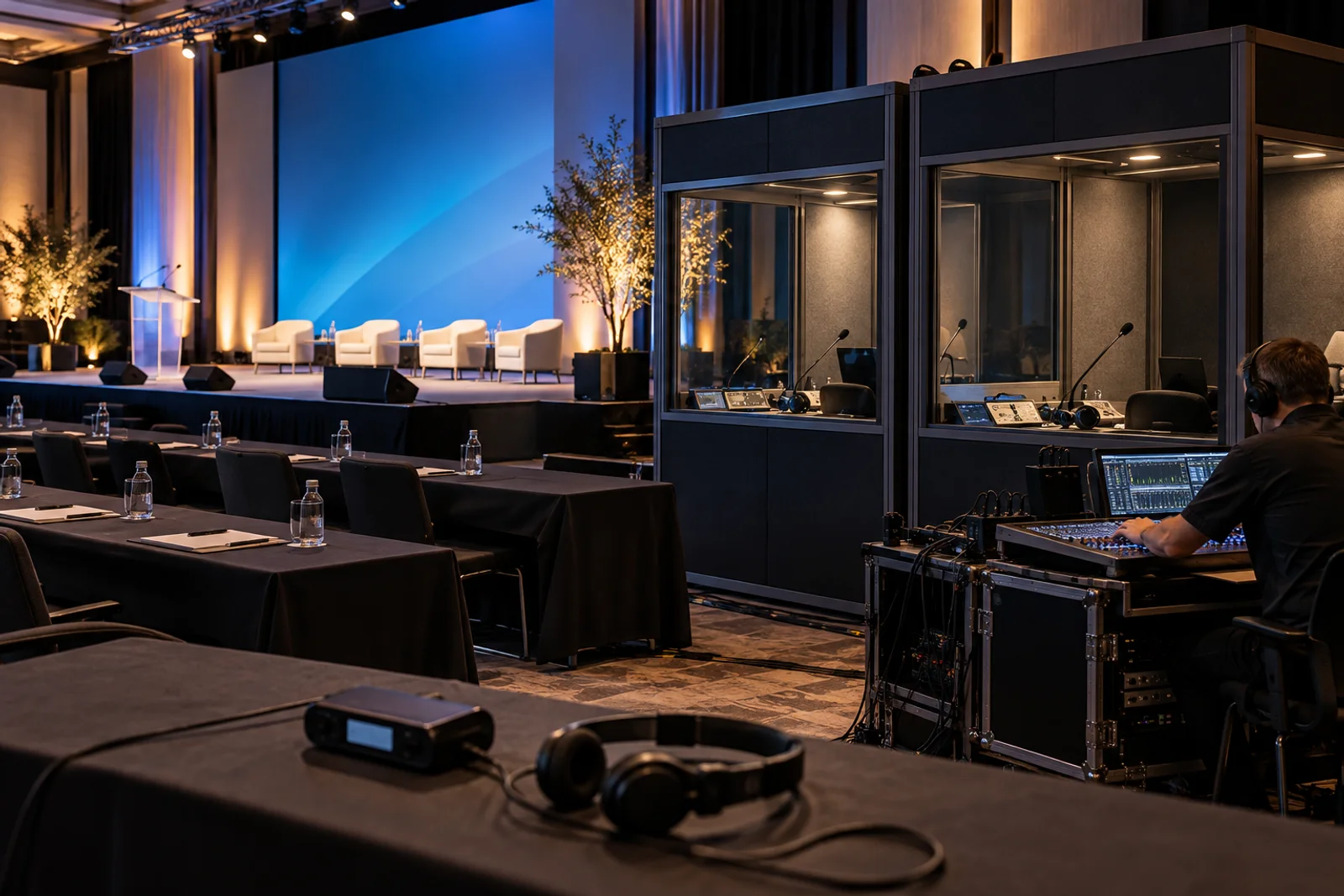
Simultaneous interpreting is often described as an interpreter speaking into a microphone while delegates listen through headsets. In practice, every link matters: the speaker microphone, mixing desk, interpreter audio, booth acoustics, transmitter, receiver and the technician monitoring the room.
Planning conference interpreting equipment in Ankara should therefore begin with the programme and venue—not with a receiver count alone. A compact board meeting, a hotel conference and a hybrid livestream each need a different configuration.
Start with the event format and language plan
- List the spoken languages, required listening channels and direction of interpretation.
- Mark plenary sessions, parallel rooms, workshops and off-site visits separately.
- Record the expected audience size and add a controlled reserve of receivers.
- Identify remote speakers, videoconference platforms, recordings and livestream outputs.
This event map determines the number of booths, consoles, channels, interpreter teams and technicians. It also prevents equipment from being planned for the main hall while a multilingual breakout room is overlooked.
Interpreter booths: fixed, mobile and remote
A booth creates an acoustic working environment and separates interpreter microphones from room noise. Permanent booths may already be integrated into a venue; mobile booths can be installed for temporary events; remote simultaneous interpreting uses a platform and controlled interpreter workspace away from the room.
What to check when positioning a booth
- Interpreters need a direct or high-quality visual view of the speaker, stage and presentation.
- Doors, ventilation and cable routes must not create safety or noise problems.
- The booth should be accessible without crossing restricted stage or audience areas.
- The venue must reserve enough installation and testing time before delegates arrive.
Consoles, microphones and the audio chain
The interpreter console lets interpreters listen, speak, select channels and hand over to a booth partner. Clear source audio is essential: even an excellent booth cannot repair a distant speaker, an unmuted room microphone or a remote participant joining with poor connectivity.
- Use appropriate microphones for lecterns, panels, audience questions and roaming speakers.
- Route presentation videos and remote callers into the interpreter feed as well as the room.
- Confirm that interpreters can hear the active floor language without echoes or competing feeds.
- Test the interpreted channel through the same receivers that delegates will use.
Headsets, receivers and language channels
Delegate receivers should be easy to distribute, label and collect. The event team must decide whether each seat receives a unit, delegates collect them at registration, or selected participants are issued equipment. Channel numbers should match signs and moderator announcements.
Receiver planning checklist
- Count delegates who need interpretation and include speakers, moderators and accessibility support where relevant.
- Plan spare receivers, headsets, batteries or charging capacity.
- Assign staff for distribution, troubleshooting and return control.
- Clean reusable contact equipment and prepare a clear replacement process.
How many interpreters are needed?
Simultaneous interpreting is cognitively intensive. A sustained programme is normally staffed by two interpreters per active language combination, alternating at appropriate intervals. Additional rooms, long days, highly technical content or several language directions can require more teams.
The agenda should be assessed before confirming numbers. Breaks for participants are not always breaks for interpreters if media interviews, bilateral meetings or workshop support continue.
Venue survey and technical rehearsal
For complex events, a venue survey should confirm booth space, sightlines, power, cable paths, internet capacity, room acoustics and coordination with the venue's audiovisual supplier. A technical rehearsal then checks every source and destination in the real configuration.
- Test lectern, panel, handheld and remote-participant audio.
- Play every video that contains speech and confirm the interpreters receive it.
- Verify booth-to-technician communication and the backup procedure.
- Walk through receiver distribution and the first delegate announcement.
Hybrid and remote simultaneous interpreting
Hybrid events add routing between the physical room and online platform. Remote speakers must reach interpreters with stable audio, and interpreted channels must return to both on-site and online audiences without feedback. Platform access, redundancy and technical support should be tested with the exact event accounts.
Briefing an equipment request in Ankara
- Date, venue, room names and installation window.
- Audience size, languages, channel plan and detailed agenda.
- Existing venue sound system and audiovisual supplier contact.
- Remote speakers, streaming, recording and press requirements.
- Accessibility, security, branding and equipment-distribution constraints.
Frequently asked questions
Can one booth cover two languages?
A booth is normally assigned to a language team and channel plan. Multiple languages require a configuration designed around language direction, interpreter teams and audio routing; this should not be improvised on the event day.
Are headsets enough for simultaneous interpreting?
No. Receivers are only the delegate end of the system. Interpreters also need suitable source audio, microphones, consoles, transmission, visual access and technical monitoring.
When should equipment be booked?
As soon as the venue, date and language scope are stable. Larger events and busy conference periods require earlier coordination, especially when a venue survey or custom booth layout is needed.